Fueling the AdTech Machine: Google Analytics and the Commodification of Personal Data

Digital Marketing technology diagram

This paper concerns the role of online analytics in facilitating the rise of today's ubiquitous programmatic advertising, referred to herein as "AdTech." Most criticism of AdTech has focused on online tracking which captures user data, and digital advertising which exploits it for commercial purposes. Almost entirely lost in the discussion is the role of analytics platforms, which process personal data and make it actionable for targeted advertising. I argue that the role of analytics is key to the rise of AdTech, and has not been given the critical attention it deserves. I wrote this paper while pursuing my research as a PhD student at the University of Illinois School of Information Sciences. It has not been peer-reviewed or published elsewhere, and I’m posting it here to invite comments, criticism, and suggestions. Please feel free to send me email at jackb at illinois dot edu, or twitter message me @ jackbrighton.

The “Privacy Paradox” and Our Expectations of Online Privacy

rhombus loop with many words on it

The analysis presented here is based on my review of existing research on privacy expectations of people who create online content. This analysis concerns the full range of user interactions on what we used to call Web 2.0 platforms, focusing on social media systems like Facebook, Twitter, Reddit, Instagram, and Amazon. User interactions include posting original content (text, photos, videos, memes, etc.), and commenting on content posted by others. Reviews on Amazon and comments on news websites count as online content in this analysis. Photos uploaded to photo-sharing sites and original videos posted to YouTube also count. Anything in any format created by an individual from their own original thought and creative energy, and subsequently posted by the individual on social media platforms, counts as online content. In most instances the online content or interaction contains or is traceable to personally identifiable information, even if this is unintended by the content creator.

Information and Communication Technology and Society – Annotation & Notes

In this article Fuchs introduces “Critical Internet Theory” as a foundation for analyzing the Internet and society based on a Marxian critique. He illustrates Critical Internet Theory (hereinafter CIT for brevity) using the emergence of the so-called Web 2.0 as an Internet gift commodity strategy, wherein users produce content on free platforms, which commodify the content to increase their advertising revenues. Fuchs introduces the concept of the “Internet prosumer commodity” to describe this “free” exchange of labor and value. This strategy, he writes, “functions as a legitimizing ideology.”

Platformisation, by Thomas Poell, David Nieborg & José van Dick – Annotation & Notes

In this paper, published in the journal Internet Policy Review, the authors define and contextualize the concept of platformisation from four distinct scholarly perspectives: business studies, software studies research, critical political economy, and cultural studies. They suggest a research agenda making use of these four dimensions, so as to provide insight into “ever-evolving dynamics of platformisation” as sites of both benefits and harms to individuals and society. And they offer ways to operationalize the concept of platformisation in critical research on the emergence and concentration of power among a small number of platform companies, and how they are transforming social relationships and key societal sectors. 

Newsrooms and the Disruption of the Internet: A Short History of Disruptive Technologies, 1990–2010 – Annotation & Notes

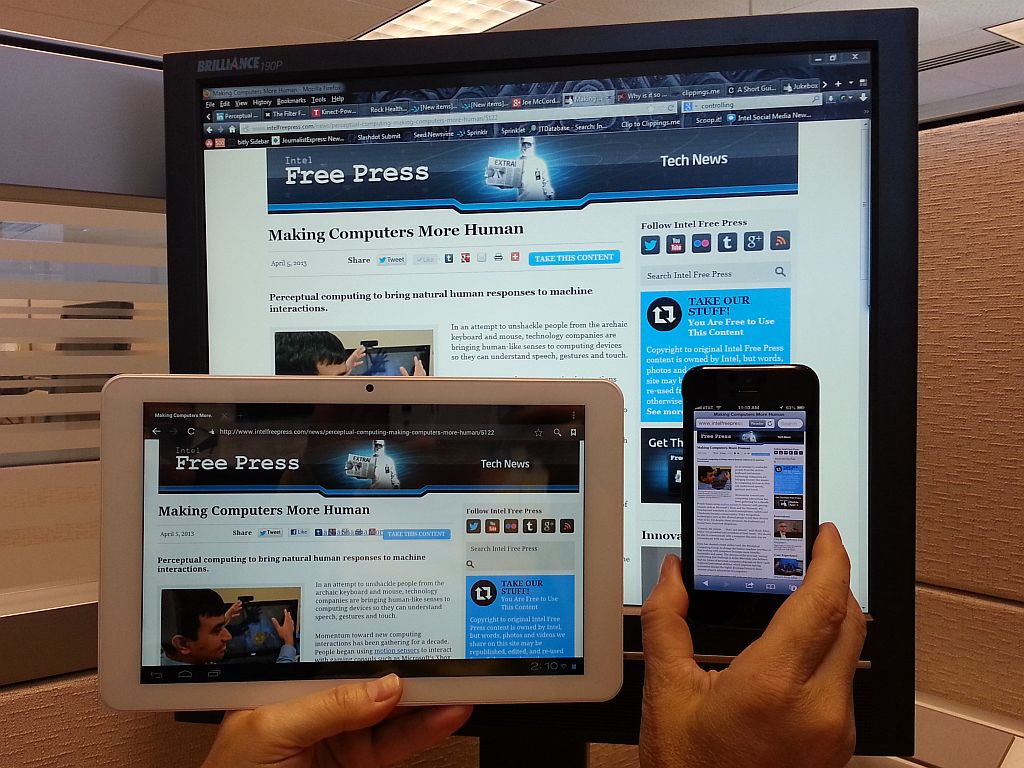
A view of news on a computer, a tablet, and a smart phone

This book is a detailed account of how news organizations in the U.S. and U.K responded to society-wide changes brought by internet technologies and the World Wide Web. The account is informative in many ways, recounting key events year-by-year and the discourse by news professionals and executives. Not surprisingly, the gist is that they couldn’t predict the future, responded the best they could, got some things right and some things wrong.

Breaking Local News: America’s Expanding News Deserts

Map showing where in the U.S. newspapers have disappeared

For years I’ve been following the long-term downward trends in the quantity, quality, and viability of news organizations, employment, and output as a journalist, and more recently in my academic research. This report, authored by Penelope Muse Abernathy, and published in 2020 by the Hussman School of Journalism and Media at the University of North Carolina at Chapel Hill, presents abundant evidence that those long-term trends have accelerated since 2004. And the author states that economic and social disruption from the COVID-19 pandemic, beginning in 2020, have “greatly accelerated” the crisis of local news.

Project Report: Political Propaganda & Social Media

All seeing eye illustration

In 2019 Ellen Lechman and I embarked on a research project to begin assessing the use of social media to spread propaganda in nations other than the United States. With this focus in mind, we conducted a literature review of recent research on propagandistic interventions occurring in Asian and European nations. We surveyed available academic and other institutional publications, and produced an annotated bibliography detailing a baker's dozen of sources we deemed most relevant.

News, Trust, and Social Media: Signals from a 2016 Echelon Insights Poll

Computer keyboard showing icons for Facebook and Messinger

There's nothing surprising in the results of a 2016 study conducted for Buzzfeed by Echelon Insights and Hart Research. It shows that the majority of Americans who were likely voters in 2016 were under the age of 50, and that about half of them share news links on social media every week. But the results of this study conform with a growing body of other research that shows a massive shift in how people discover news, and how trust works in a media system increasingly dominated by social media platforms. 

Social Media Analytics Technologies, Tactics, and Values: A Project Summary

diagram of random icons

I started this project hoping to understand how social media data is harvested, processed, analyzed, and used for marketing and political communications. While compiling this bibliography I read a lot more research than I could include, and almost none of it reflected any consideration of how it might affect human beings, communities, politics, or the natural world. It should be expected that other people will insert their own values into applications of this technology, for good or ill. And that's exactly what's happening.

Annotation – A Bundle of Open Source Resources for Social Media Data Mining and Analysis

command line graphic of hand tools

We've reached the final annotation in our series on "Social Media Data Collection, Processing, and Use in Research, Marketing, and Political Communication." Toward the end of the project my research drifted from traditional academic sources to investigative journalism. We now veer further off-track into blog posts and GitHub repos. Some videos and a course syllabus on Data Science for Social Systems. Tools, documentation, and related sources that don't fit neatly into any particular box. This isn't so much an annotation as a grab bag of annotated links. I apologize in advance.