Newsrooms and the Disruption of the Internet: A Short History of Disruptive Technologies, 1990–2010 – Annotation & Notes
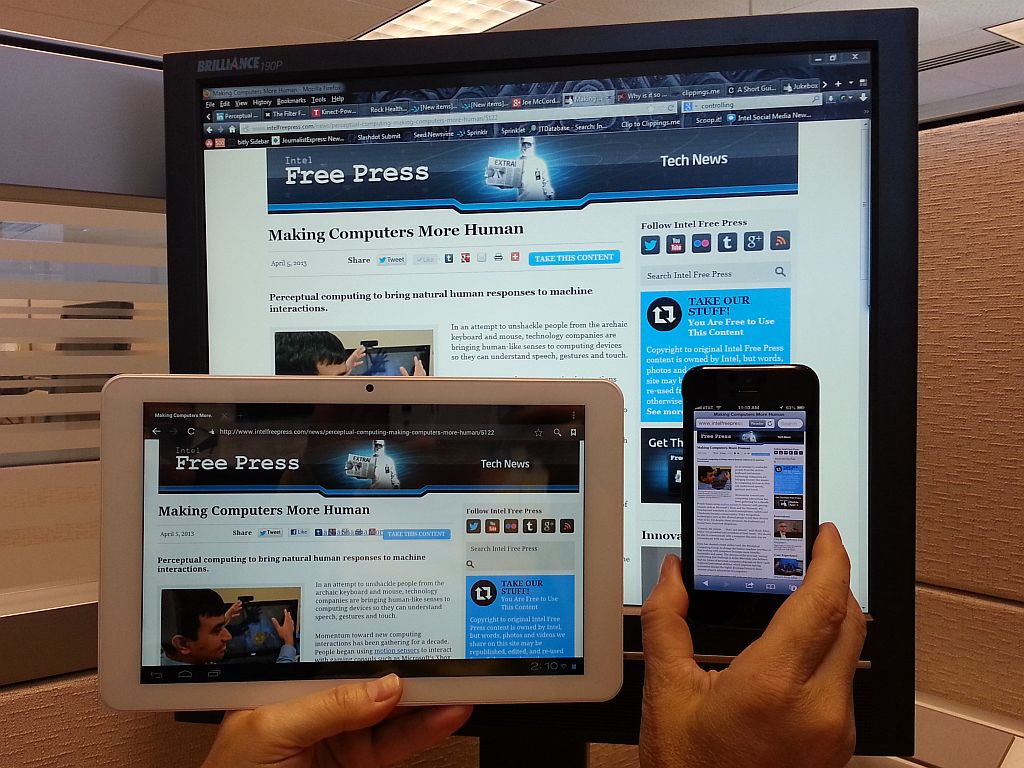
A view of news on a computer, a tablet, and a smart phone

This book is a detailed account of how news organizations in the U.S. and U.K responded to society-wide changes brought by internet technologies and the World Wide Web. The account is informative in many ways, recounting key events year-by-year and the discourse by news professionals and executives. Not surprisingly, the gist is that they couldn’t predict the future, responded the best they could, got some things right and some things wrong.

Going Web-First at The Christian Science Monitor: A Three-Part Study of Change, by Nikki Usher – Annotation & Notes

In 2009 the Christian Science Monitor was among the daily newspapers ceasing print publication in favor of web-only distribution. This paper presents ethnographic research on that transition by former journalist and current associate professor of Communication Studies at the University of San Diego Nikki Usher. Usher observed editorial operations and interviewed news staff at the Monitor during three periods between February 2009 and February 2010: before the transition to web-only, after the transition but before adopting a new content management system, and after CMS implementation. Their goal was to understand the meaning of the change to Monitor’s journalists and its impact on their organizational and journalistic values. 

Project Report: Political Propaganda & Social Media

All seeing eye illustration

In 2019 Ellen Lechman and I embarked on a research project to begin assessing the use of social media to spread propaganda in nations other than the United States. With this focus in mind, we conducted a literature review of recent research on propagandistic interventions occurring in Asian and European nations. We surveyed available academic and other institutional publications, and produced an annotated bibliography detailing a baker's dozen of sources we deemed most relevant.

Annotated Bibliography: How Humanities Scholars Find, Access, and Use Audiovisual Archives in Research

abstract poster about finding things

I recently completed a short annotated bibliography during a research project for Information Science 501 at the University of Illinois iSchool. I'm interested in the information seeking behavior of academic researchers in relation to resources in audiovisual archival collections, so as to better understand how the materials might be made more findable and useable by humanities scholars. I assumed I would find a wide range of research on this topic. I was wrong.

Annotation – A Bundle of Open Source Resources for Social Media Data Mining and Analysis

command line graphic of hand tools

We've reached the final annotation in our series on "Social Media Data Collection, Processing, and Use in Research, Marketing, and Political Communication." Toward the end of the project my research drifted from traditional academic sources to investigative journalism. We now veer further off-track into blog posts and GitHub repos. Some videos and a course syllabus on Data Science for Social Systems. Tools, documentation, and related sources that don't fit neatly into any particular box. This isn't so much an annotation as a grab bag of annotated links. I apologize in advance.

Annotation – Cambridge Analytica: Undercover Secrets of Trump’s Data Firm

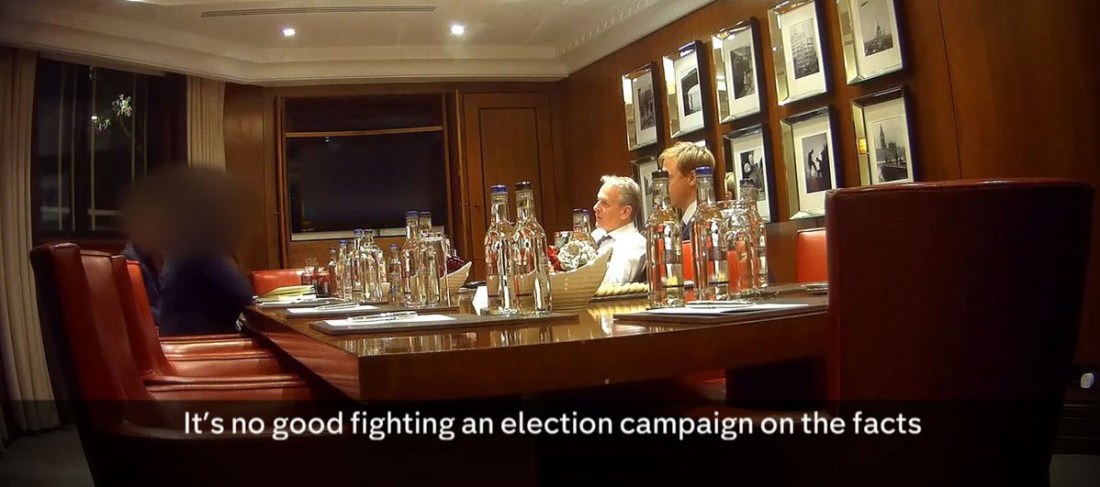
Cambridge Analytica staff saying it's no good winning an election on the facts

In the third and final part of their undercover investigation, Channel 4 News captures chief executives from Cambridge Analytica explaining how the firm used social media analytics to win the 2016 U.S. presidential election for Donald Trump. After this report was aired in March, Cambridge Analytica executives denied using social media analytics to win the election for Donald Trump. In earlier parts of this report, they claim to always tell the truth, while adding that actually people may not know or care what's true and what isn't. Anyway if people were misled it's not their fault. Also, these are not the 'driods you're looking for.

Annotation – Cambridge Analytica Uncovered: Secret filming reveals election tricks

Screenshot of video Cambridge Analytica Uncovered

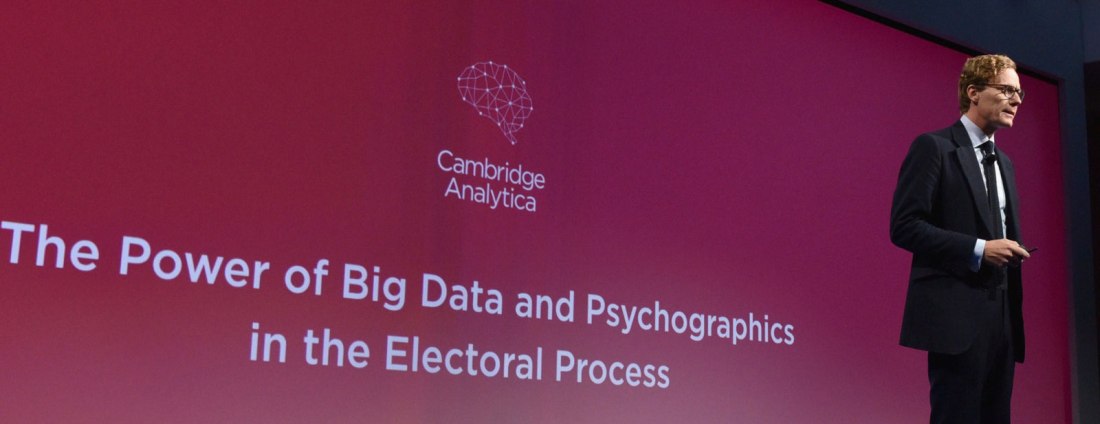
The Cambridge Analytica story is what inspired me to pursue research on the details and methods of data processing that form the technical basis of using social media metadata for psychographic purposes, and the role of programming in accessing, collecting, processing, and using social media data, and the specific tools and workflow that enable this work. But I believe we can't fully understand the technical story without the political and social context. Technology isn't neutral, and our values are embedded in every tool we build.

London's Channel 4 News discovered the values held by senior executives of Cambridge Analytica, as they detail in part two of their investigative report.

Annotation – Channel 4 News Report – Cambridge Analytica: Whistleblower reveals data grab of 50 million Facebook profiles

So far in this project I've been annotating traditional academic sources. These sources explore methods of machine learning, Natural Language Processing, sentiment analysis, and the tools used to mine social media for research purposes. But the literature hasn't kept pace with the news, and social media data is being used for things other than academic research. Like maybe stealing elections. Here begins a series of three annotations of investigative reports by London's Channel 4 News. These are video stories about Cambridge Analytica and its methods and role in political campaigns in the U.S., Africa, Europe and beyond. These are of course non-traditional annotations. But I consider the source credible, and given the subject important to include.

Annotation – Technology Firms Shape Political Communication: The Work of Microsoft, Facebook, Twitter, and Google With Campaigns During the 2016 U.S. Presidential Cycle

megaphone shouting social media icons

If you ran digital strategy for a presidential campaign, and Facebook came knocking on your door and said "We want to help you win this election," would you turn them down? There's nothing like a little help from the mothership.

Annotation: A 61-Million-Person Experiment in Social Influence and Political Mobilization

Sign saying spread the vote

Finally, a break from annotating technical stuff. Don't get me wrong I like it but...here's where it hits the road: Changes in voting behavior. Here we have a study published in 2012 in Nature on a randomized controlled study of changes in users voting behavior after seeing different versions of messages on Facebook. You want to read this one.