Fueling the AdTech Machine: Google Analytics and the Commodification of Personal Data

Digital Marketing technology diagram

This paper concerns the role of online analytics in facilitating the rise of today's ubiquitous programmatic advertising, referred to herein as "AdTech." Most criticism of AdTech has focused on online tracking which captures user data, and digital advertising which exploits it for commercial purposes. Almost entirely lost in the discussion is the role of analytics platforms, which process personal data and make it actionable for targeted advertising. I argue that the role of analytics is key to the rise of AdTech, and has not been given the critical attention it deserves. I wrote this paper while pursuing my research as a PhD student at the University of Illinois School of Information Sciences. It has not been peer-reviewed or published elsewhere, and I’m posting it here to invite comments, criticism, and suggestions. Please feel free to send me email at jackb at illinois dot edu, or twitter message me @ jackbrighton.

The “Privacy Paradox” and Our Expectations of Online Privacy

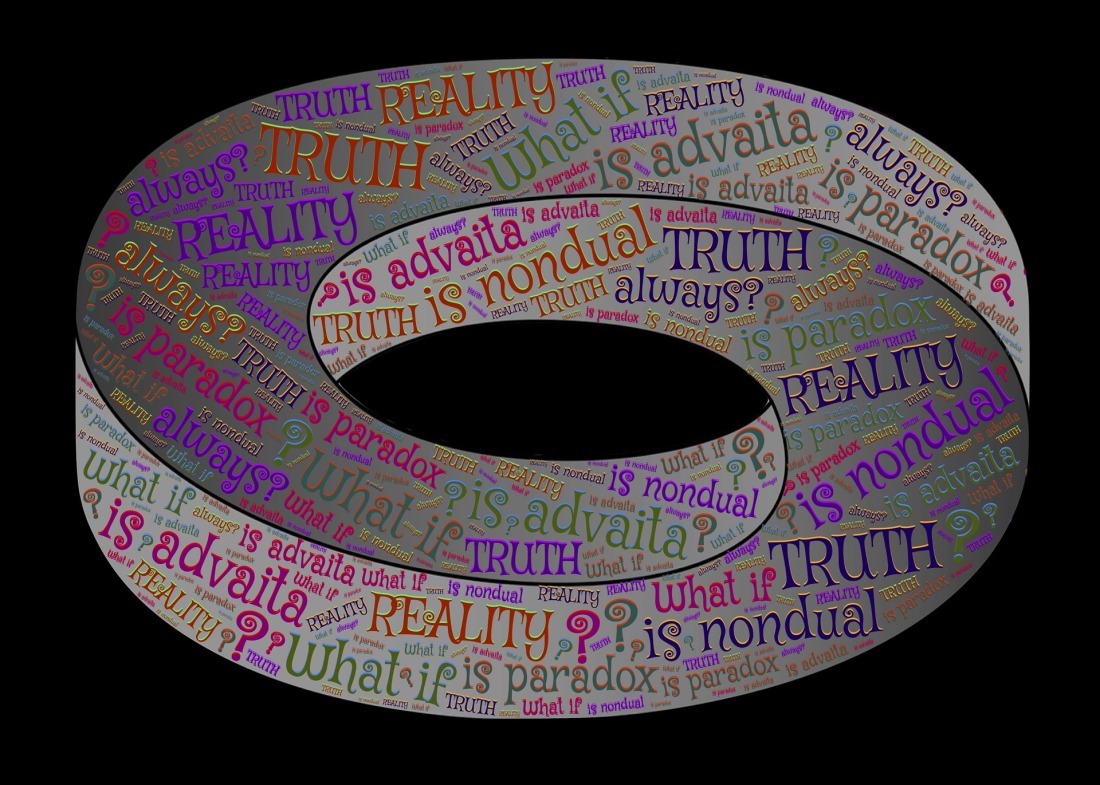
rhombus loop with many words on it

The analysis presented here is based on my review of existing research on privacy expectations of people who create online content. This analysis concerns the full range of user interactions on what we used to call Web 2.0 platforms, focusing on social media systems like Facebook, Twitter, Reddit, Instagram, and Amazon. User interactions include posting original content (text, photos, videos, memes, etc.), and commenting on content posted by others. Reviews on Amazon and comments on news websites count as online content in this analysis. Photos uploaded to photo-sharing sites and original videos posted to YouTube also count. Anything in any format created by an individual from their own original thought and creative energy, and subsequently posted by the individual on social media platforms, counts as online content. In most instances the online content or interaction contains or is traceable to personally identifiable information, even if this is unintended by the content creator.

The Application of Artificial Intelligence to Journalism: An Analysis of Academic Production – Annotation & Notes

This paper presents a summary of academic research on AI use in journalism, based on the authors’ review of 358 texts published between 2010 and January 2021. The materials they reviewed were found through academic databases including Scopus and Web of Science, in addition to Google Scholar. Most of the articles were published in English, and the majority was from the United States. Given significant developments with AI, and AI in journalism, since 2021, this paper is really a snapshot of research published for the period covered. The authors do note a rapid increase in research until 2019, with a dropoff in 2020 presumably from disruptions of the COVID-19 pandemic.

Reshaping the public radio newsroom for the digital future, by Nikki Usher – Annotation

NPR logo on the side of the NPR buiilding

Published in 2012 based on field research conducted by Nikki Usher from 2008 to 2010, this paper presents an account of NPR’s response to a rapidly changing digital media environment. As audiences increasingly looked to the web for news, management at NPR understood a need for fundamental change in its operations and identity, from an organization focused entirely on news production for radio broadcast, to a digital media company producing multimedia for online distribution along with traditional NPR broadcast content. 

Newsrooms and the Disruption of the Internet: A Short History of Disruptive Technologies, 1990–2010 – Annotation & Notes

A view of news on a computer, a tablet, and a smart phone

This book is a detailed account of how news organizations in the U.S. and U.K responded to society-wide changes brought by internet technologies and the World Wide Web. The account is informative in many ways, recounting key events year-by-year and the discourse by news professionals and executives. Not surprisingly, the gist is that they couldn’t predict the future, responded the best they could, got some things right and some things wrong.

The Future Of News and How To Stop It

A crowd around a newspaper with headline that says fake news

Today we have an abundance of information resources undreamed of in past centuries, but are exposed via the Internet to more disinformation than any previous generation. Digital media technologies are being massively leveraged to spread propagandistic messages designed to undermine trust in all forms of information, and to stimulate strongly affective responses and an entrenchment of political, cultural, and social divisions. The critical demands of the digital age have outpaced development of a corresponding information literacy. Meanwhile journalists are accused by authoritarian leaders of being “enemies of the people” while facing layoffs from newsrooms no longer supported by a sustainable business model. Short of reinvention, professional journalism will be increasingly endangered and the relevance of news organizations will continue to decline. In this paper I propose a new collaborative model for news production and curation combining the expertise of librarians, journalists, educators, and technologists, with the objectives of addressing today’s information literacy deficit, bolstering the credibility and verifiability of news, and restoring reasoned deliberation in the public sphere.

Through a Digital Glass Darkly: Early English Books Online

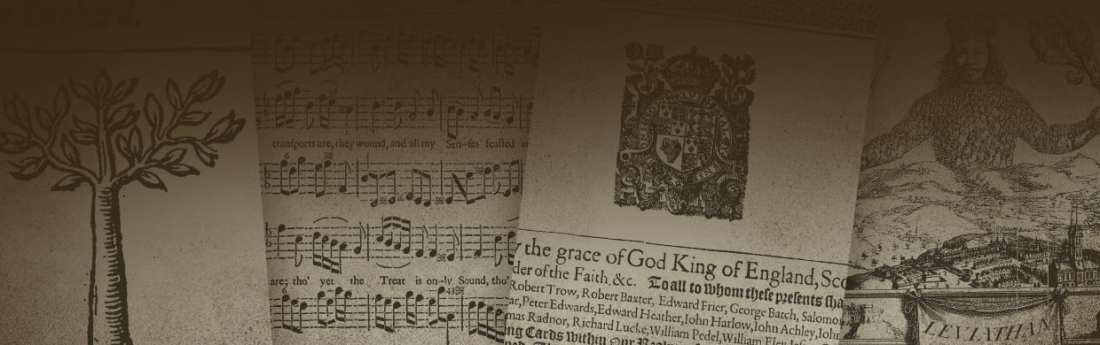
Image of early english book pages

The digital artifact known as Early English Books Online (EEBO) is a resource for research on British history and literature between 1473 and 1700. EEBO is a collection of 146,000 mostly English works accessible via an online database, available by subscription from ProQuest. In this article I first review the history of EEBO, which began with cataloging efforts more than a century ago, through the processes that developed the online version used by so many scholars today. I then critically review its limitations, and discuss some of the challenges and drawbacks inherent in the transformation of analog source materials into digital form, including information distortion and loss, format obsolescence, and the challenges of digital preservation.

Breaking Local News: America’s Expanding News Deserts

Map showing where in the U.S. newspapers have disappeared

For years I’ve been following the long-term downward trends in the quantity, quality, and viability of news organizations, employment, and output as a journalist, and more recently in my academic research. This report, authored by Penelope Muse Abernathy, and published in 2020 by the Hussman School of Journalism and Media at the University of North Carolina at Chapel Hill, presents abundant evidence that those long-term trends have accelerated since 2004. And the author states that economic and social disruption from the COVID-19 pandemic, beginning in 2020, have “greatly accelerated” the crisis of local news.

News, Trust, and Social Media: Signals from a 2016 Echelon Insights Poll

Computer keyboard showing icons for Facebook and Messinger

There's nothing surprising in the results of a 2016 study conducted for Buzzfeed by Echelon Insights and Hart Research. It shows that the majority of Americans who were likely voters in 2016 were under the age of 50, and that about half of them share news links on social media every week. But the results of this study conform with a growing body of other research that shows a massive shift in how people discover news, and how trust works in a media system increasingly dominated by social media platforms.